
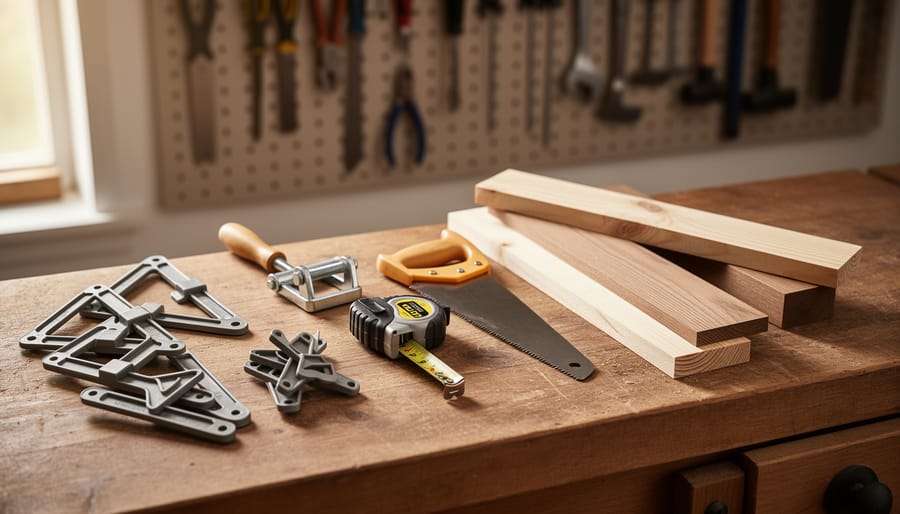
The best home improvement kit is the one that matches your first three projects, not the one with the biggest piece count. A kit built around a birdhouse, a simple shelf, and a few repairs around the house will serve you far better than a 200-piece set full of attachments you won’t touch for a year. Quality of the core tools and having the right basics matter more than sheer numbers.
That’s good news if you’re just starting out. You don’t need to spend big or own everything on day one. Even the Milescraft 1600 TriGrips, a humble 4-pack of triangle grippers that holds the top spot on Amazon’s Best Sellers list for Woodworking Project Plans & Kits, shows how a small, focused set can earn its place on a workbench. Check each listing for specs and compatibility before you buy, since details vary from kit to kit.
Every skilled woodworker started with a modest kit and a project they were a little nervous about. Then came the second project, then the tenth, and eventually a shop full of tools and friends to share them with. In this guide, we’ll walk through what a good kit contains, how the main types compare, and which one fits where you are right now.
What Makes a Good Carpentry Kit? Key Buying Factors to Weigh Before You Shop
Start With Your Projects, Not the Piece Count
Here’s a secret the number on the box won’t tell you: a bigger count doesn’t automatically mean a better fit. Plenty of large kits reach their impressive totals by counting every little screw, drill bit, and driver tip as its own “piece.” Those extras are handy, but they aren’t the same as having a solid hammer, a reliable saw, and a measuring tape you trust.
So start with what you actually want to make. Picture your first project. Maybe it’s a simple shelf, a small side table, a squeaky-door repair, or a handmade pen. A shelf calls for measuring, cutting, and driving fasteners. Pen turning is a different adventure altogether and usually comes as its own project kit.
Here’s an easy way to think about it:
– Write down the first two or three things you’d love to build or fix.
– List the tools those projects would genuinely need.
– Pick the kit that covers that list well, even if its number is smaller.
Every skilled artisan in our community began with one modest project. Let yours guide the shopping.
The Carpentry Essentials Every Kit Should Cover
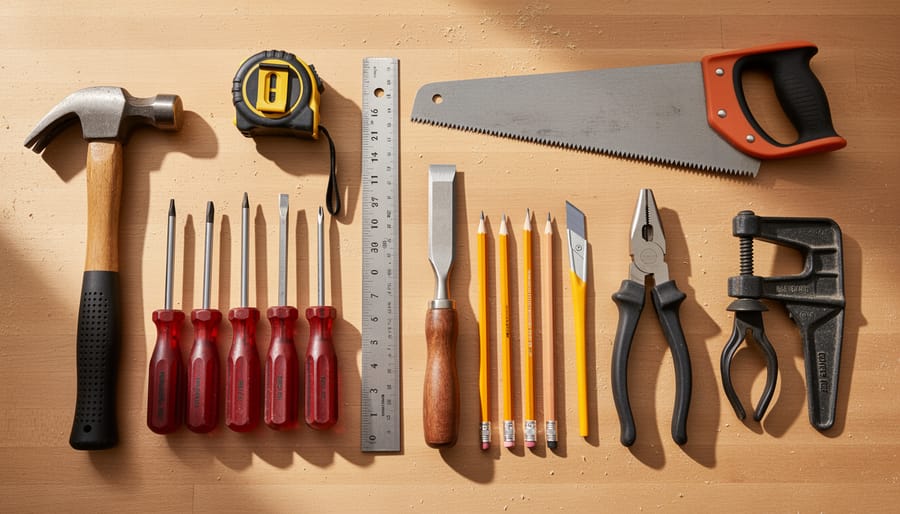
Every good starter kit should cover the same handful of jobs, no matter how many pieces are in the box. If you want a deeper dive, our guide to must-have carpentry tools goes into far more detail, but here’s the short checklist to carry with you while you browse:
- Hammer: drives and removes nails, the tool you’ll reach for first.
- Tape measure: measures lengths so your cuts and shelves actually line up.
- Screwdrivers (flathead and Phillips): turn screws; having both head types covers most hardware.
- A saw: a hand saw or hacksaw cuts boards and, in the hacksaw’s case, small metal bits like bolts.
- Pliers or an adjustable wrench: grip, bend, and tighten things your fingers can’t.
- Work-holding helpers: clamps or grippers keep your wood from sliding while you cut or drill.
- Voltage tester: a small gadget that checks whether a wire is live, handy for repairs around the house.
That last category often gets overlooked. Steady wood is safer and more accurate wood, which is why accessories like the Milescraft 1600 TriGrips, a 4-pack of triangle grippers, have earned the #1 spot in Amazon’s Best Sellers for Woodworking Project Plans & Kits.
Don’t worry if a kit misses one or two items. You can add them later as your projects grow, and plenty of makers in our community started with just a hammer, a tape measure, and a big idea.
Quality, Storage, and Room to Grow
You don’t need a showroom of gleaming steel to judge a kit. Pick up a tool, if you can, and ask a few simple questions. Does the handle feel solid in your grip? Do the screwdriver tips and pliers jaws look cleanly finished, or rough? Does anything rattle or wobble? Those quick checks tell you a lot.
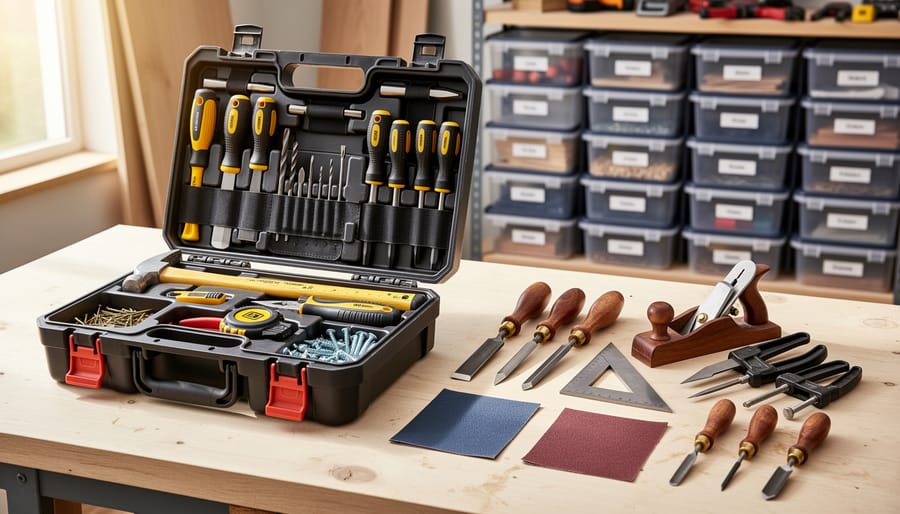
Storage matters more than most beginners expect. A tool bag or case gives every tool a home, which keeps your workspace tidy and means you spend your time building instead of hunting for the tape measure. Some compact sets, like the Anvil Homeowner’s Tool Set, come with a bag for exactly this reason.
A cordless screwdriver can be a nice bonus. It saves your wrist when you’re driving lots of screws, though it’s a convenience rather than a must-have. Finally, think about growing room: a kit with a decent bag and solid basics leaves space to add specialty carpentry tools later, one project at a time. A modest starter kit can carry you a surprisingly long way.
General Tool Sets vs. Woodworking Project Kits vs. Specialty Add-Ons: Types Compared
All-Purpose Home Tool Sets
All-purpose home tool sets are the classic starting point for a lot of makers. They bundle everyday hand tools, and sometimes a bag to carry them, into one tidy purchase. The Anvil Homeowner’s Tool Set is a good example of the compact end: an 18-piece set that includes a tool bag, so everything has a home from day one. Stanley offers a 65-piece home tool kit that sits more in the mid-size range, with a wider mix of tools for the money.
These sets shine for repairs and basic assembly. Tightening a loose cabinet hinge, putting together flat-pack furniture, or hanging a picture all fall right in their sweet spot. They’re also a friendly way to try small DIY projects without a big investment.
Here’s how the main kit types stack up:
| Kit type | What’s typically included | Best for | What to watch for |
|---|---|---|---|
| Compact homeowner tool sets | Basic hand tools, often with a tool bag | Repairs and simple assembly | Limited variety of saws and clamps |
| Large multi-piece household sets | Hand tools plus many small accessories, sometimes a cordless screwdriver | All-around household fixes | High piece counts can include many small bits and fasteners |
| Woodworking project kits | Parts for one project, such as a pen | Learning a craft hands-on | Usually needs extra tools to finish |
| Work-holding or grip accessories | Grippers or clamps, such as a 4-pack | Keeping work steady | Add-ons, not a full toolkit |
The honest limit is that general sets aren’t built specifically for fine woodworking. Think of them as a solid foundation, and add specialty carpentry tools as your projects grow.
Big Piece-Count Household Sets
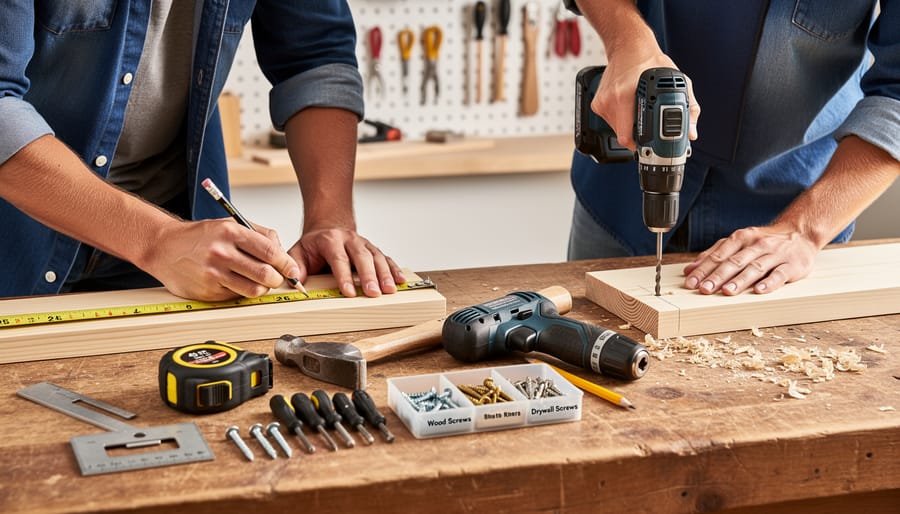
If you’ve ever stood in the tool aisle staring at a box that says 144 or even 218 pieces, you know the pull of a big number. Sets like the Apollo 144-piece kit, which includes a 4.8-volt cordless screwdriver, and the Home Depot household set with 218 pieces, which packs in a hammer, wrenches, screwdrivers, a hacksaw, and a tester, can be a wonderful way to get a whole toolbox in one go.
Here’s the honest part: a big chunk of those pieces are small fasteners, driver bits, and other little accessories. That doesn’t make the set a bad deal. It just means the count tells you less about the hand tools than you might think, so look at the actual tools in the list.
For repairs, furniture assembly, and your first few carpentry projects, these sets give you plenty to work with. Think of them as a launchpad, and add specialty tools as your projects grow.
Woodworking Project Kits and Helpful Accessories
If you want a gentler way into carpentry, a hands-on project kit is a wonderful place to start. A pen-making kit, for example, bundles the small hardware you need to turn a piece of wood into something you can actually use. The Colarr 7mm Slimline Twist Pen Kit comes with 20 pieces, and BRW Slimline Pen Kits are sold in a 10-pack, so you get several chances to practice. Check each listing for what’s included before you buy, since specs and compatibility vary.
Why do these work so well? They’re small, low-pressure, and quick to finish. You get a real result in a single sitting, which builds confidence fast. Many makers say their first finished pen was the moment they started to feel like woodworkers.
A work-holding helper is a smart companion to any project. Milescraft TriGrips come as a 4-pack, and the Milescraft 1600 TriGrips are currently ranked #1 in Amazon’s Best Sellers for Woodworking Project Plans & Kits. Rankings change often, so check the page for today’s standings. Steadier work means safer, tidier results.
Where to Start: Kit Recommendations for Beginners, Hobbyists, and Gift-Givers
For the Brand-New Beginner
If you’re brand new, a compact set with a tool bag is your best friend. Look for the basics: a hammer, tape measure, screwdrivers, pliers, and a small saw. A bag keeps everything in one spot, so you’ll actually find your tape measure when the glue is drying. The Anvil Homeowner’s Tool Set, an 18-piece set that includes a tool bag, is a good example of this size.
Picture a first-timer I’ll call Maya. She had never built anything. She grabbed a small bagged set, a few boards, and a weekend, and made a simple wall shelf. The first cut wobbled and one screw went in crooked, but by Sunday evening she was hanging a shelf she built herself. It’s a small win, and it’s how every skilled artisan starts. Next, she decided to keep a woodworking journal jotting down what worked so her second project went smoother.
A manageable first-project list might be:
– A simple wall shelf
– A small step stool
– A basic picture frame
We’d love to see yours. Share your first project with the Wood & Work community and cheer on the next beginner!
For the Growing Hobbyist
Once you’ve built a few things and the basics feel comfortable, it’s time to grow your toolbox on purpose. A mid-size or large household set is a smart foundation, because it covers the everyday fastening, measuring, and repair jobs so you can focus your energy on learning.
Then add one or two thoughtful extras. Work-holding is a great place to start. Milescraft 1600 TriGrips, a 4-pack of triangle cookie work grippers, currently rank #1 in Amazon’s Best Sellers for Woodworking Project Plans & Kits, and steady work is safer and easier to cut accurately. Check the listing for specs and compatibility before you buy.
Next, pick up a small project kit, like a pen kit, to practice precision. Tiny projects reward patience and careful measuring, and finishing one feels fantastic. Add one new tool with each project, and you’ll be amazed how quickly your skills and your workshop grow together.
For Gift-Givers
Shopping for a maker in your life? Skip the generic toolbox and give them an experience. A pen-making kit, like the Colarr 7mm Slimline Twist Pen Kit or a 10-pack of BRW Slimline Pen Kits, lets them turn a simple blank into something they can actually use and show off. Pair it with a gift certificate for a woodworking class, and you’ve covered both the materials and the know-how.
If your giftee already has a few tools, a 4-pack of Milescraft TriGrips is a small, thoughtful add-on that helps hold work steady. Tuck it in alongside the pen kit for a gift that feels complete.
The best part? You’re not just handing over a box. You’re giving someone their first finished piece, and the confidence that comes with it. Check current listings for availability before you buy.
Common Mistakes to Avoid When Buying Your First Carpentry Kit
Here’s the good news: almost every first-kit mistake is easy to sidestep once you know what to look for. Think of these as friendly signposts rather than warnings, because every skilled maker in our community has bought a tool they didn’t end up needing.
- Buying on piece count alone: Check what’s actually inside, since many big sets pad the number with small screws and bits, and pick the kit with the solid hand tools you’ll really use.
- Skipping work-holding: Add a few grippers, like the 4-pack Milescraft 1600 TriGrips, so your wood stays put while you cut and sand.
- Ignoring storage: Choose a set with a bag or case, because a tidy toolbox makes you want to show up and build more.
- Expecting one kit to do everything: Treat your first kit as a foundation and plan to add specialty tools as your projects grow.
- Assuming compatibility without checking: Read the listing carefully before you buy, especially if you hope to mix accessories or bits from different brands.
- Not planning for learning: Pair your tools with a small first project, a lesson, or a workshop so they turn into finished pieces instead of gathering dust.
Notice how none of these fixes cost much? A little checking before you click “add to cart” goes a long way. Compatibility details in particular vary from listing to listing, so give them a quick read rather than trusting the box count.
Most of all, don’t let the fear of a “wrong” purchase keep you from starting. Even a modest kit with good basics will carry you through your first shelf, your first repair, and your first proud “I made this” moment.
Home Improvement Kit FAQs
What should be in a basic carpentry tool kit?
Look for a hammer, a tape measure, screwdrivers, a saw, pliers or wrenches, and something to hold your work steady. If those basics are covered, you can build and repair a surprising amount.
Is a bigger piece count always better?
Not at all. Many large sets reach their number with small fasteners and bits, so judge a kit by the core tools it includes, not the figure on the box.
Are project kits good for beginners?
Yes, they’re a low-pressure way to practice. A pen-making kit, for example, lets you learn a skill and finish something satisfying without a big workshop.
How often do best-seller lists change?
Often. Amazon updates its Best Sellers lists frequently, so check current rankings and availability before you buy rather than trusting an older snapshot.
A few more questions come up again and again, so here are quick answers. Do you need a cordless screwdriver? It’s handy for driving lots of screws, but it isn’t essential on day one. Plenty of makers start with a basic manual set and add a cordless tool once they know how much they’ll use it.
What about specs and compatibility? Those details vary from kit to kit, so always check the listing for what’s included and whether accessories fit together before you commit.
And if you ever feel stuck, you’re in good company. Plenty of beginners learn faster by asking questions and sharing their first builds with the wider woodworking community. Everyone started somewhere, and a friendly nudge from fellow makers goes a long way.
Here’s the heart of it: the best home improvement kit isn’t the biggest one on the shelf. It’s the one that fits the projects you actually want to build. Maybe that’s a simple shelf, a wobbly chair you’re finally fixing, or a first pen turned from a little kit. Pick the basics that match your plans, and you’re already ahead.
You don’t need everything on day one. Start small, build one project at a time, and add tools as your skills (and curiosity) grow. Every skilled artisan you admire once held a hammer and wondered where to begin.
And you’re not doing this alone. Join the Wood & Work community through virtual lessons or hands-on workshops, and you can even learn with Workshop XR to practice in a whole new way. Turn those new tools into finished pieces, and come share what you make. We can’t wait to see it!